
The Equal Rights Amendment

When the Nineteenth Amendment was ratified in 1920, Alice Paul was just 35 years old. She would live for another 57 years, until the age of 92. Rather than considering the fight for women’s equality finished, Paul spent the remainder of her life pursuing another constitutional guarantee: equal rights regardless of sex.
Looking Beyond Voting Rights
Paul recognized the Nineteenth Amendment as a historic achievement but believed that voting rights alone could not undo centuries of discrimination and bias against women.
Looking to the Thirteenth, Fourteenth, and Fifteenth Amendments, which addressed rights for African Americans following the Civil War, she concluded that women needed a comparable constitutional protection.
At the time, the U.S. Constitution specifically protected women's right to vote through the Nineteenth Amendment, but Paul believed a broader constitutional guarantee was necessary to challenge discrimination.
Alice Paul’s Vision for Equality
The Lucretia Mott Amendment
In July 1923, on the 75th anniversary of the Seneca Falls Convention, leaders of the National Woman’s Party, including Alice Paul, convened to discuss discrimination against women. Paul introduced a proposed constitutional amendment then known as the “Lucretia Mott Amendment.”
“Men and women shall have equal rights throughout the United States and every place subject to its jurisdiction. Congress shall have power to enforce this article by appropriate legislation.”
Paul believed that without a constitutional amendment guaranteeing equal rights, women had limited ability to defend themselves against discrimination in federal courts. She continued campaigning for the amendment for the rest of her life.
Opposition Within the Women’s Movement
The ERA, like the Nineteenth Amendment before it, faced opposition from some women. Some reformers feared that the amendment could undermine hard-fought workplace protections for women and children. Others worried that equal-rights provisions could affect women's ability to receive financial support from their husbands or could expose women to military combat.
The Alice Paul Amendment
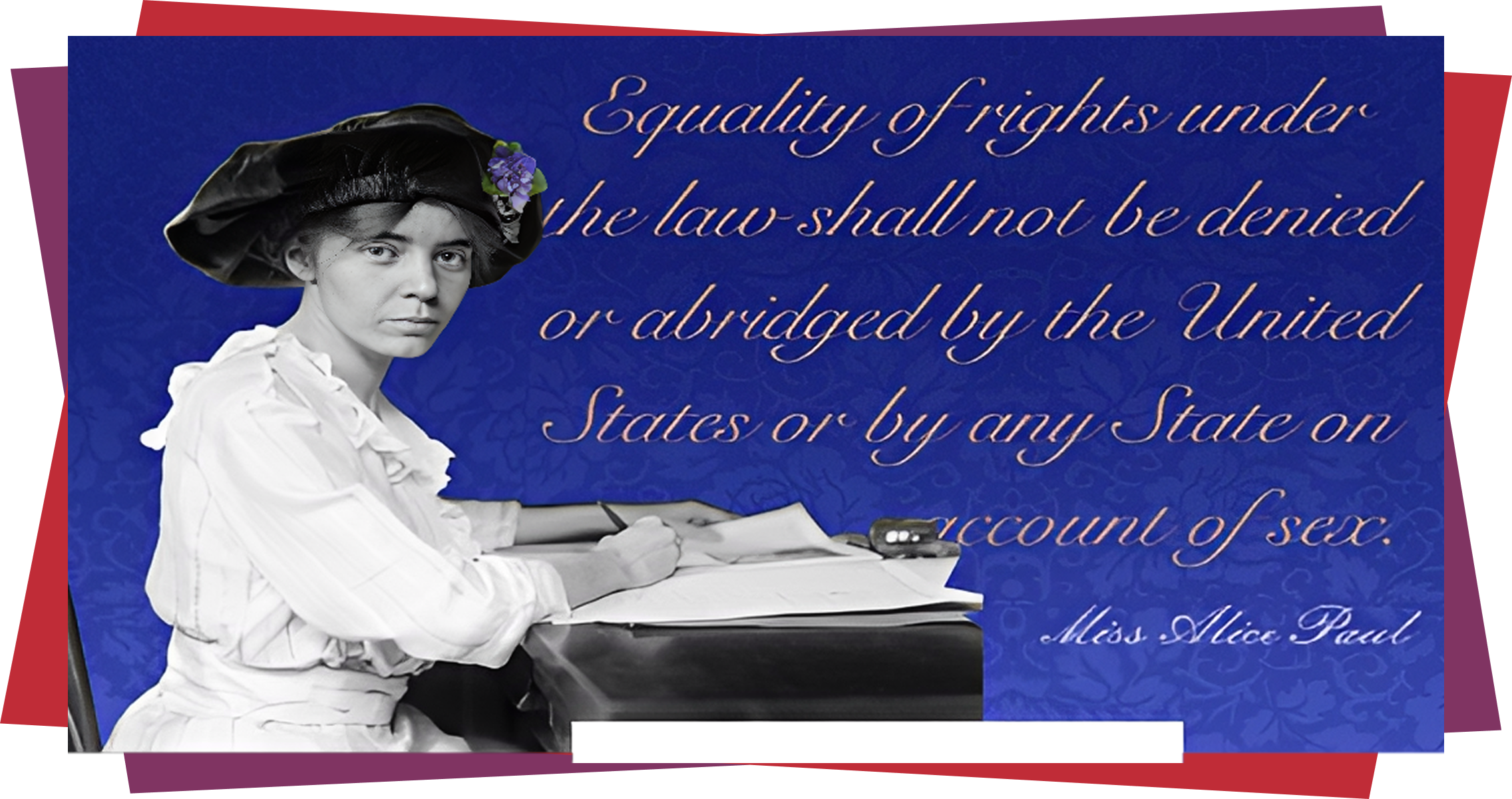
During the early 1940s, both the Republican and Democratic parties added support for the Equal Rights Amendment to their party platforms. Alice Paul subsequently revised the amendment's wording to reflect the language of the Fifteenth and Nineteenth Amendments.
“Equality of rights under the law shall not be denied or abridged by the United States or by any state because sex.”
From that point forward, the proposal became known as the “Alice Paul” Amendment.
The ERA Reaches Congress

A Growing Women’s Rights Movement
A renewed women’s rights movement emerged during the 1960s, with women increasingly demanding equality under the law. Support for the ERA grew alongside the movement.
On March 22, 1972, the U.S. Senate approved the ERA after the House had approved it in 1971. Congress then sent the proposed amendment to the states for ratification. Under the terms set by Congress, three-fourths of the states—38 of 50—needed to ratify it within seven years.
The Ratification Deadline
Twenty-two states ratified the ERA during its first year, but the pace subsequently slowed. When the original seven-year deadline approached in 1979, the amendment was still three states short of the required 38.
Congress extended the deadline to June 30, 1982, but no additional states ratified the amendment during the extension.
Alice Paul’s Final Years
Alice Paul Died in 1977.
At that time, Indiana had become the 35th and final state to ratify the ERA before the long ratification gap that followed.
In 1980, the Republican Party removed the ERA from its platform.
Despite continued support from women's organizations and other advocates, opposition from religious and business groups accompanied a broader shift toward political conservatism.
Supporters nevertheless continued working toward ratification.
The ERA Gains New Momentum
The Me Too Movement
-
The movement for gender equality gained renewed public attention decades later.
-
The Me Too movement was created in 2006 to help survivors of sexual violence, particularly Black women and girls, find resources for healing.
-
In 2017, women began coming forward in record numbers to share experiences of sexual assault and sexual harassment in the workplace.
-
The #MeToo movement became a major news story and brought renewed energy to efforts surrounding the ERA.
-
In 2017, Nevada ratified the ERA, followed by Illinois in 2018. These actions brought the total number of states that had ratified the ERA to 37—one short of the 38 required.
Virginia Becomes the 38th State
A Pivotal Moment
Attention turned to Virginia as legislators prepared to consider the ERA in early 2019. A December 2018 poll reported that 81% of Virginia voters supported passage.
-
The Virginia Senate passed the ERA with all 19 Democratic senators and seven Republican senators voting in favor.
-
Republicans held a 51–49 majority in the Virginia House of Delegates.
-
Two Republican defections were needed for passage in the House.
-
Only one Republican delegate defected.
-
The resulting 50–50 tie defeated the measure at that time.
A Change in Virginia’s Legislature
The political landscape changed following the November 2019 elections, when Virginia Democrats won control of both chambers of the legislature.
-
Democrats gained full control of Virginia’s state government for the first time since 1994.
-
ERA ratification became one of their early priorities.
-
On January 15, 2020, the Virginia House voted to approve the ERA.
-
The Virginia Senate also approved the amendment.
-
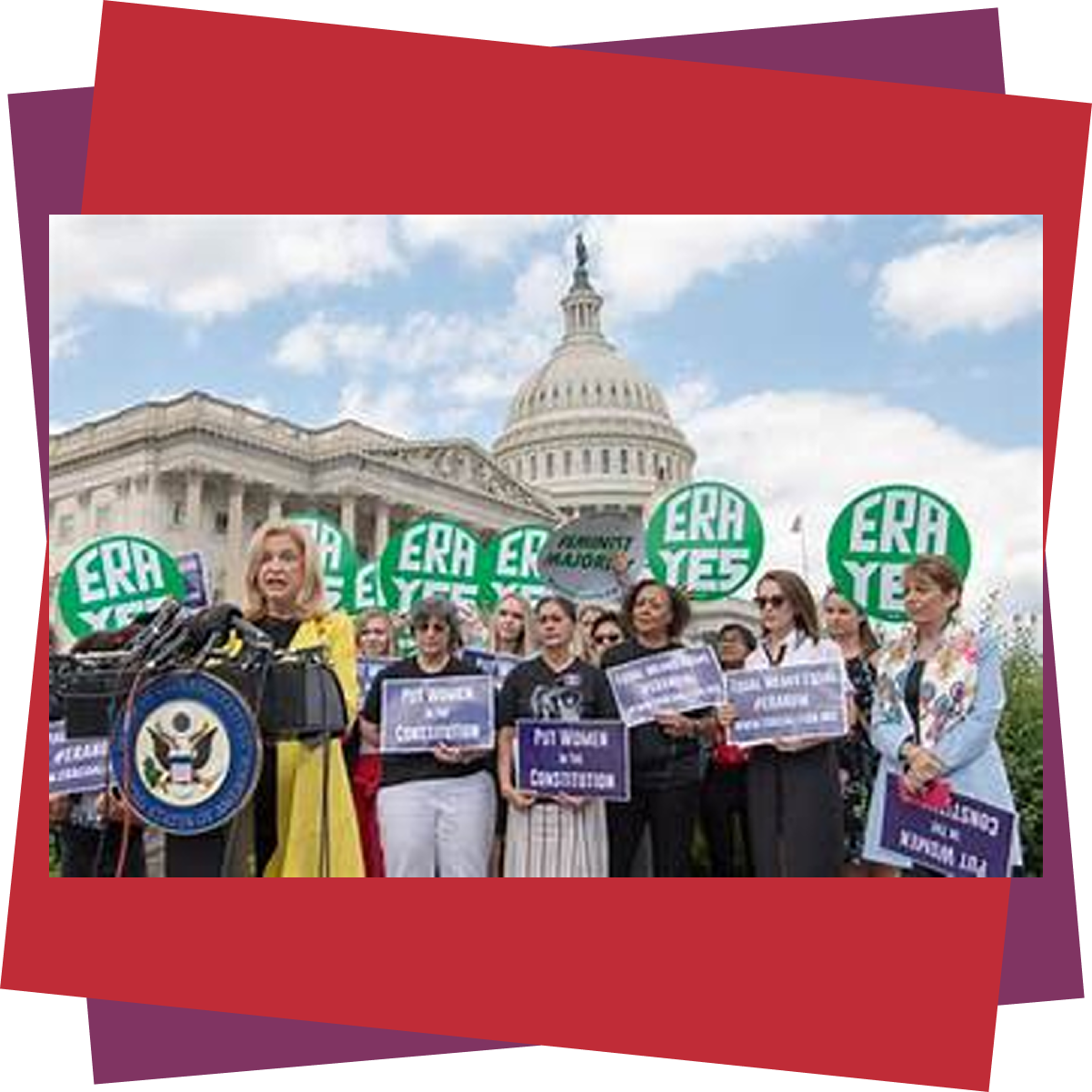
On January 27, 2020, Virginia became the 38th state to ratify the amendment.
-
Virginia’s ratification reached the three-fourths threshold specified by Article V.
The Legal Questions Continue
Ratification Deadline Dispute
Virginia's ratification created a new legal chapter rather than immediately ending the ERA debate. The original congressional deadline had expired in 1982, and legal questions remained over whether Congress could impose, extend, or remove a deadline for ratification.
In January 2020, the U.S. Department of Justice's Office of Legal Counsel concluded that Congress had constitutional authority to impose the ERA's deadline and that the amendment could not be certified because that deadline had expired.
The National Archives continues to state that the ERA cannot currently be certified as part of the Constitution because of established legal, judicial, and procedural decisions concerning the ratification deadline.
Carrying the Work Forward
A Legacy Passed Down
When the suffragists drafted the Declaration of Sentiments, they understood that they might never see their work completed during their lifetimes. Their hope was that future generations would continue the work toward full equality for women.
That responsibility now belongs to the generations that followed them.
Women’s Growing Political Representation
The movement continued to gain visibility as a record number of women were elected to Congress in 2027. Women also began running for president in record numbers, reflecting broader participation in political life and continued efforts to expand women's voices and influence.
The Fight Continues
The ERA reached its 100th anniversary as a proposed amendment in 2023. Supporters of ratification have continued their efforts, with advocacy focused on both national and local participation.
The Road Ahead
The future of the ERA remains tied to ongoing legal and political questions surrounding ratification, while supporters continue to organize and advocate for its recognition.
The long history of the Equal Rights Amendment reflects generations of organizing, setbacks, renewed campaigns, and continued advocacy. The work that began with Alice Paul and earlier generations of women's rights activists continues to shape the conversation around constitutional equality.
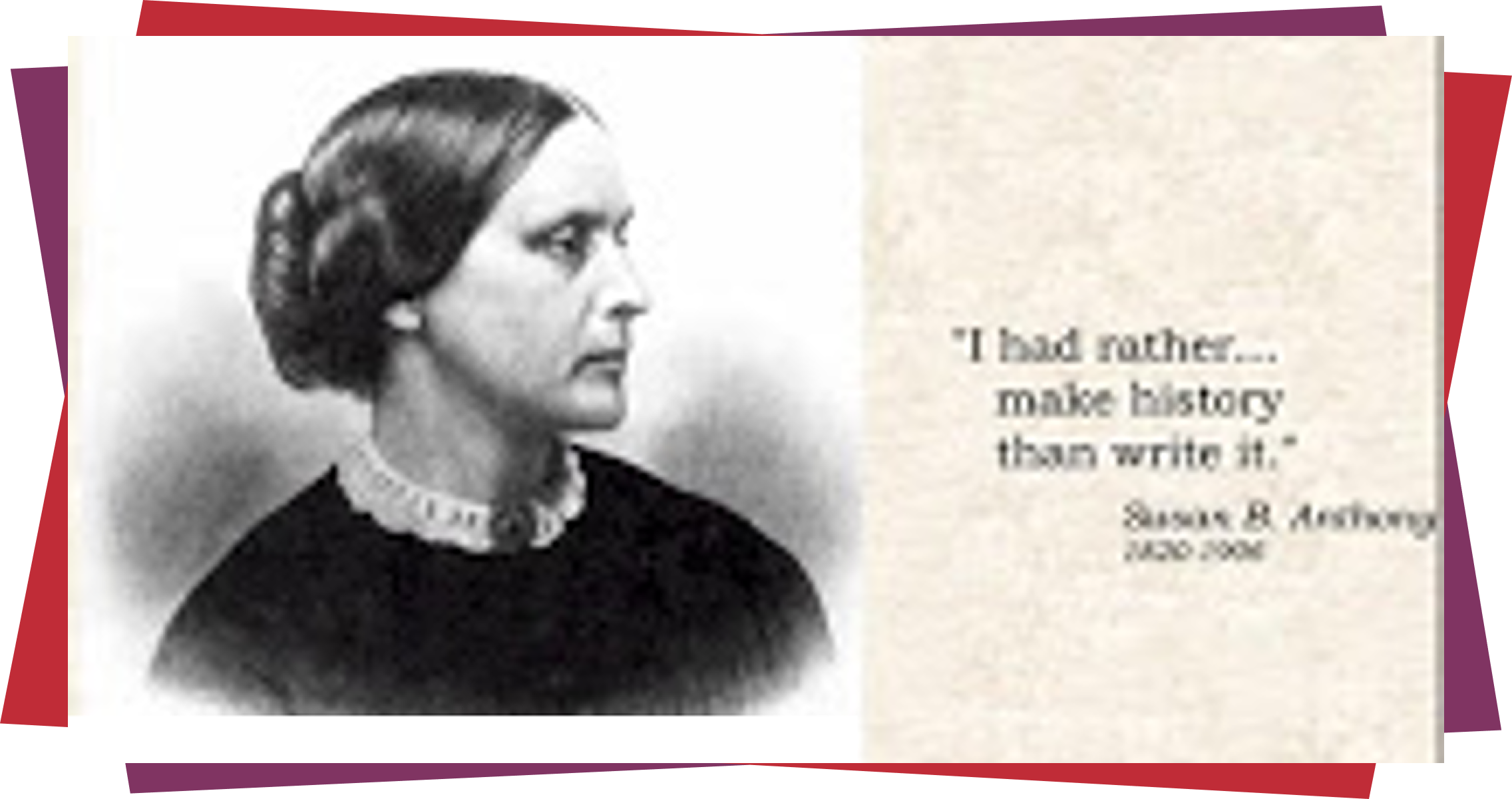
As Susan B. Anthony Famously Said:
“Failure Is Not an Option.”
Stay Connected to the Work
Susan Zimet's advocacy spans decades, but the conversation around equality and opportunity continues. Get in touch with her if you have any questions.